Article · 21 Sep 2026

Since 2020, ISSR has run an annual book prize for the best books in the academic field of science and religion, which I refer to as science and religion studies (SRS). Obviously, the term "science and religion" is problematic, as it is singular and focuses only on one dimension of spiritual faith and wisdom traditions. However, it is simple to communicate, and one's imagination allows free rein on what those entail and should not be bound to the literal interpretation of that title. That aside, I wanted this first post to be about the ISSR Book Prize for 2026 because it was an important year for me for two reasons.
The first is that it was the first year in which ISSR hosted the Book Prize outside the bounds of the founding donation that created it. The Book Prize originated from a generous donation by the Templeton World Charity Foundation, part of the Templeton umbrella. It was a generous grant, and it allowed us to carry out the Book Prize fully funded. This enabled us not only to offer cash prizes to the prize winners, of whom there are three each year, but also to help bring the winners to the American Academy of Religion's annual meeting, which takes place in various cities across the United States every November. This included helping them get there, having a celebratory dinner in their honour, and having them present at a hospitality event during AAR where we announced the winners. The fact that ISSR is able to continue this prize and offer the cash prize, even though the donation has ended, is, I think, a testament to the strength and dedication of ISSR, its executive committee, and its Fellows.
The second is that this was my first year involved in reading and commenting for the Prize, as in years past, I have managed and run the Prize's logistics and communications. Although I was not officially part of the Prize Committee, I did provide secondary opinions on some of the books. This meant I had to read many of the newest and best books available in SRS. I can't express how wonderful it is to be involved with an organization where my job is not only to be affiliated with the brightest minds in this field, but also to have access to their work and to be given the space to engage with them at the level of review and discussion. These two combined made it a special year for me as assistant director of the International Society for Science and Religion and as a newly minted PhD.
The first book I want to mention won the prize in the professionals and educators category. Timothy Middleton, Tutorial Fellow in Theology at Regent’s Park College, University of Oxford, released an important book titled, Witnessing a Wounded World: A Theology of Ecological Trauma released in 2025 by Fordham University Press.
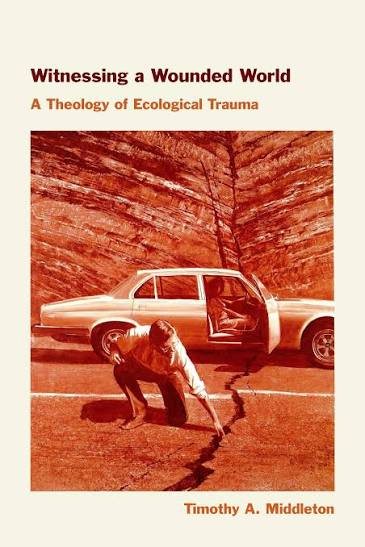
Middleton approaches ecological suffering through the lens of trauma theology, a relatively untapped area of study that he wishes to expand and legitimize, building the foundational tools to ask what kind of traumas arise from climate change. Middleton applies his freshly scaffolded theology of eco-trauma to three key areas of theological significance: communication, flesh, and time. While I am not a theologian, nor am I someone who finds theology compelling, I do think that this book deserved the Prize for its sensitive and detailed application of theology to a critical crisis that all of us face, regardless of our beliefs. The climate crisis is no doubt one of the most important and pressing confrontations that we all must reckon with, and Middleton's work is an excellent and accessible text that won the prize for professionals and educators because its use in the seminary, the church, or the faculty of divinity can inspire theologically framed thinking on the importance of imagining the world as a reflection of a body capable of the trauma that humans both cause and experience. Some examples that he uses, such as hurricanes or flooding, are important, but I do think it's worth noting that he also extends this trauma to problematic practices like open-pit mining. I am not of the mind that economic and industrial processes should cease because of climate-related ideals, but I do respect Middleton's usage of them, as I am certain that economics and industrial motivations should not outweigh an ethical and considered approach to advancing their goals. The book is scholarly, insightful, passionate, and committed to beginning a conversation on witnessing the world as wounded by trauma.
The second book, for the academic prize, was by Peter Harrison, Professor Emeritus of History and Philosophy at the University of Queensland, Professorial Research Fellow at the University of Notre Dame, Australia, for his book Some New World: Myths of Supernatural Belief in a Secular Age published in 2024 by Cambridge University Press.
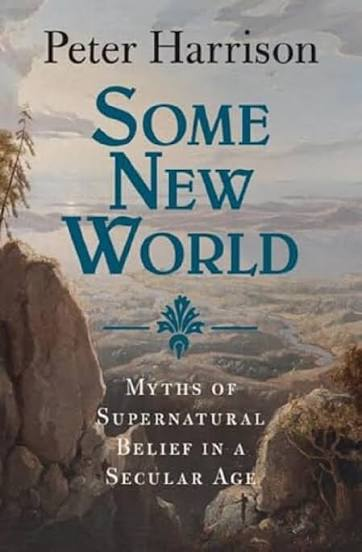
Harrison was the former Andreas Idreos Professor of Science and Religion and Director of the Ian Ramsey Centre at the University of Oxford, so he brings to this book the experience of a long and distinguished career in this field. Some New World is what Fraser Watts called “his most ambitious book to date”, and I agree with this assessment. It is, in some ways, a spiritual sequel to his 2015 book, The Territories of Science and Religion. Which, for many coming from the humanities or social sciences, is considered a central text in the SRS field. I use spiritual sequel because, in many ways, the ambitions are quite similar. There are terms that we take for granted that Harrison wants to reveal as historically and philosophically complex. A larger book with a much broader scope than Territories, this book's brilliance lies in its application of what I consider a real combined history and philosophy of science (HPS). And while the scope is broad and encompassing, Harrison never loses attention to detail and makes acute observations on the complex relationships among culture, society, and ideas pertaining to his subjects. In this book, those subjects are “natural” and “supernatural”, whereas in Territories, his subjects were “science” and “religion”. This book, no doubt, will become a classic in the field, surpassing Territories as a must-read in the field of SRS.
The final book for this year's prize, winning the category for a general readership, was the late Helen De Cruz’s Wonderstruck: How Wonder and Awe Shape the Way We Think published in 2024 by Princeton University Press.
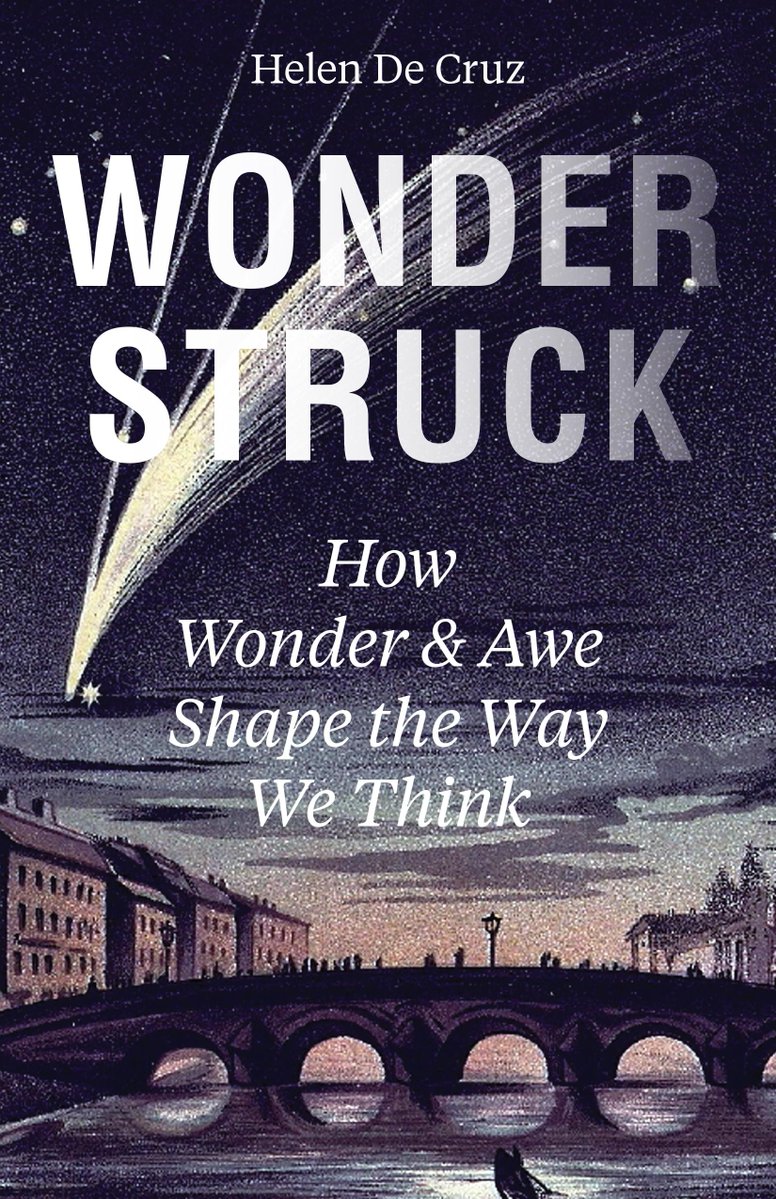
De Cruz was the Danforth Chair in the Humanities at Saint Louis University and unfortunately passed away in June of 2025. This book is well suited to a general readership, as it is accessible and engaging, with a style that is expressive yet scholarly and insightful. De Cruz wants us to think of wonder and awe not as experiences that only come from notable events or from the abstract ideals of some tradition, but as playing a central role in the everyday, even in what we may call the mundane. Whether it is the glint of light off the crests of gently moving water or a single flower emerging from a crack in a sidewalk, or the starry sky above on a dark and cool evening, De Cruz's insightful and well-constructed work inspires us to see the world as full of wonder and moments of awe. Even though this work is genuinely accessible to readers of all levels, it remains scholarly and sophisticated in its thinking, drawing on a broad range of scholarship on wonder, awe, aesthetics, and art. It is a book that is easy to pick up, hard to put down, and stays with you long after you turn the final page. It is a very fitting book to leave as a legacy from what was a very distinguished career, and ISSR is pleased to honour her for all she gave to the field of science and religion throughout it.
All three of these books are well worth your time, and I strongly recommend each to a wide range of readers, whether in the field of SRS or in their respective subfields of religious studies, history of science, history of ideas, or theology more broadly. And of course, anyone interested in this should read these books. I thank each of the authors not only for engaging with ISSR over the many months it takes to finalize the book prize results, but also for their contributions to this field.
If you are an author or are interested in the ISSR Book Prize, you can find out more information on our website here. Thank you, and I will see you next time.
Read the original on X.