Article · 4 Oct 2026
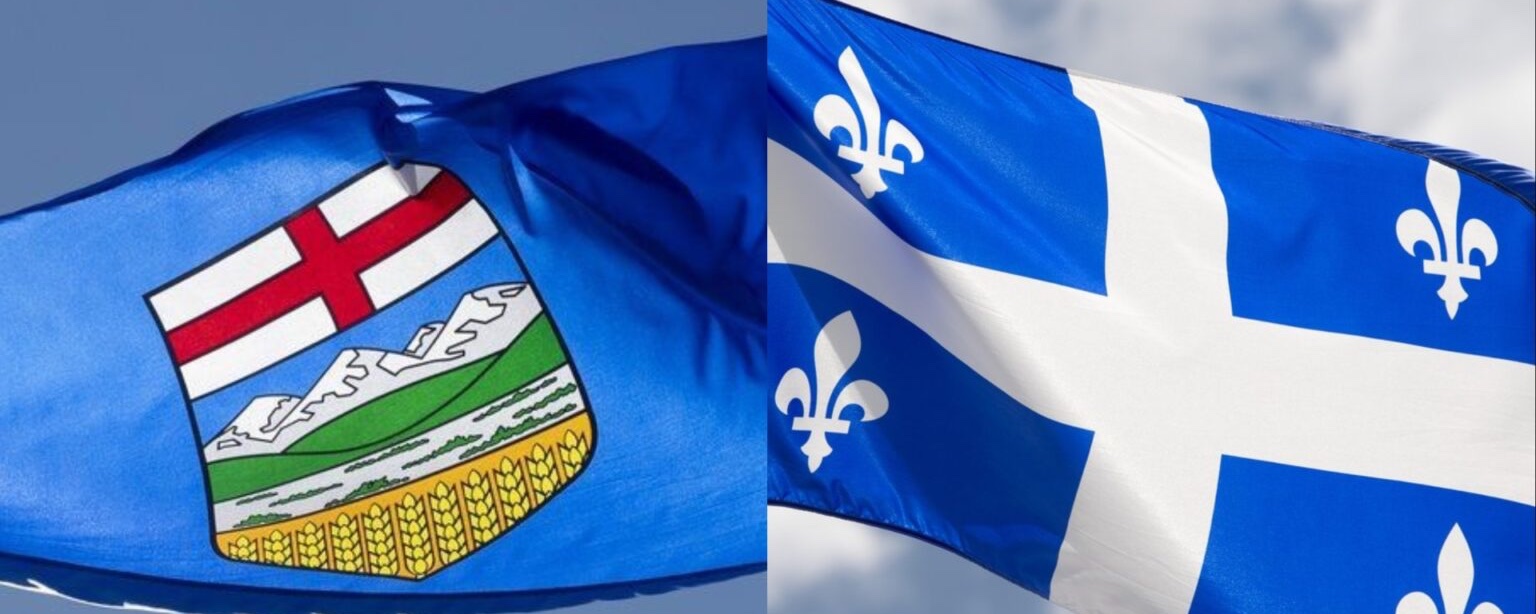
On 03 October 2026, The Globe and Mail published an investigative report titled "The Elephant in the Room," investigated and reported by Carrie Tait, Grant Robertson, and Nathan Vanderklippe. This report clearly identified the role of United States Republicans, their political strategists and organizers, in shaping the Alberta sovereignty movement. A rather shocking investigation, it became clear to me that much of what I had been suspecting over the past months was indeed true: foreign interference is far more rampant in this country than we allow ourselves to believe.
Alberta is a unique province in many respects. Its population is quite small relative to its land area, but it has the highest GDP per capita in Canada, driven by some of its very successful resource extraction and service companies. It also has fairly high education rates, not the highest in Canada, but respectable. Importantly, it has only two major cities: Edmonton and Calgary. This means two metropolitan areas account for roughly 70.2% of Alberta's population, so roughly 30% of Albertans live outside these two major city centres. That amount represents a relatively small share of the population and aligns well with current polling, which suggests that around 22% of Albertans support the Canadian sovereignty movement and want to leave Canada.
Not all rural Albertans will support the sovereignty movement, and not all urban dwellers will oppose the urbanist movement. But there is, in fact, a correlation between these geographic living conditions in Alberta. Much of the discussion I hear about the Alberta sovereignty movement, since it maps quite well onto Alberta's rural populations, is that it is the blue-collar, the undereducated, and the disenfranchised who are helping push this movement forward. I hear this from smart, intelligent people I respect, but I think they're missing an important aspect of this. I think what the Globe and Mail article highlighted so well was that this movement is being led by the wealthy Christian businessmen of Alberta.
To make the connections necessary to bring Republican-aligned strategists, such as the 10X software team, to Alberta, you need a level of financial competence only the wealthy can access. While yes, it is the people who are now helping to push this sovereignty movement forward, it is important to remember that a specific socio-economic class of individuals within Alberta helped propagate this and artificially propel the conversation.
The most shocking revelation in this report is that it doesn't shy away from suggesting that the leak of nearly 3 million voters in Alberta was deliberate and intended to manipulate the Albertan public. This is a shocking injustice to the sovereignty of Alberta, which is counter to the very movement that this group claims to be about, but also probably criminally indictable. I wouldn't be surprised if a criminal investigation were to begin as a result of this report.
Alberta faces a vote on the 19th of October, asking whether there should be a vote to then later hold a referendum vote. My hope is that Albertans say no, and the polls seem to suggest that this will be the case. However, the precedent has been set, and the concern will linger after the voting dust has been settled.
But this isn't the only concern that we have here in Canada.
Tomorrow, 05 October, the province of Quebec will hold a provincial election, and, in all likelihood, the Parti Québécois will form government for the first time in over 8 years. For anyone familiar with Canadian politics, you know that the PQ is a sovereignty party, meaning that their victory tomorrow will trigger a march towards a referendum on whether Quebec should remain part of Canada.
The PQ has claimed that any vote on Quebec sovereignty would be held off until after Donald Trump leaves office. Sensible, perhaps, but meaningless, as the dice would already be cast. Now, the PQ has a long history in Quebec, and this won't be the first time the PQ has put forward a referendum, but there seems to be a level of urgency and influence at work here that I'm growing increasingly suspicious of and concerned about.
My suspicions were confirmed by the Globe and Mail on Alberta, but why is Quebec acting this way now? One explanation is that internal factors in Quebec are less than optimistic. Wages aren't growing as quickly as they were, and they're growing more slowly than in Ontario. GDP in Quebec has been quite stagnant lately, following a post-pandemic boom. Job creation has slowed, and there are growing concerns about immigration and secular ideals that Quebec holds dear to its identity.
Some of these troubles can be put on the Trudeau government. I agree with this (within reason and based on data), but some of these issues are global in nature. For example, the cost of living has risen across the G20 and does not discriminate. The global COVID-19 pandemic has left its mark like a scar across the planet, and countries everywhere are still reeling from that major economic slowdown. Countries with stricter restrictions are experiencing slower recoveries than anticipated compared to those with fewer restrictions, and Quebec had the same restrictions as the rest of Canada, though it relaxed them more quickly than, say, Ontario (which may have contributed to its post-pandemic boom). However, Quebec faces acute cultural differences compared with Ontario, particularly in its focus on the culture war over immigration.
So the question that lingers behind all of this is: why now? If some of these factors are not internal to Quebec or even to Canada, I think there are lessons to be learned from what was revealed about the Alberta separation movement that we can apply to Quebec.
As I've said before, this isn't the first time Quebec has threatened to leave our Federation, but I think the times are notably different now than they were during the 1995 referendum. I know that the blame is widely distributed and isn't due to a single factor. However, I do believe that a fair share of the blame can be laid on social media and the liberal ideas that bind those platforms—specifically, claims of free speech.
Canada needs to take these more seriously as threats to Canada. The operating definition of “threats to the security of Canada” in the CSIS Act, under classification (b) states a threat as “foreign influenced activities within or relating to Canada that are detrimental to the interests of Canada and are clandestine or deceptive or involve a threat to any person”. If what's happening in Alberta is not a threat to Canada, I'm not sure what the CSIS Act does. Social media platforms have been receiving quite a bit of attention lately, and rightly so. They are "safe spaces" where foreign interference can occur easily to incite rage, fear, and the hostility necessary to bring about another referendum vote in our provinces, which have both been relatively successful (despite their current setbacks, which are no different from those in the rest of the country).
To me, this seems like an urgent priority for the Mark Carney government. The Build Canada Act is priority number one, I agree, but at least within the top five priorities should be a higher level of funding and urgency for our intelligence operations and the supporting services that can contain foreign interference during a time when the unity of Canada is of the utmost importance for the success of our survival against the economic and political onslaught that is the Goliath of the United States to our David of Canada.
Something I've been thinking about is what the government of Canada should do and consider if these provinces do vote to leave. One option I would hope would be first would be to understand the complete legal pathways for Alberta and Quebec to return under a "no questions asked, welcome back" policy.
I can't imagine a scenario where the outcomes would be better in the long run for Alberta and Quebec. Not only will they need to build governments large enough to handle the workflows required to develop complete policy packages for trade relations, defence, resource management, education, healthcare, etc., but they will also need to fund everything entirely themselves. Their healthcare system, their retirement savings system, and everything else the Canadian government contributes to but does not solely pay for will need to be something these countries deal with themselves. Alberta alone, in 2026-27, will receive $9.2 billion in health funding, and Quebec $30.3 billion.
Not only that, but they will need to establish the diplomatic and security relations that every foreign country with close ties to Canada has, and, critically, they will need to gain Canada's trust to establish those close ties. This will cost an absurd amount of money and will likely bankrupt them, I think. The struggles will be too hard, and they would be forced to do one of two things: either join the United States or rejoin Canada.
Taking a rather romantic and idealistic view of these two countries, I think the choice is clear: Canada is the better option, given the historical, cultural, educational, medical, and institutional differences between Canada and the USA. These provinces have a home, a place from which these two places came and to which they belong.
I would conclude by saying that, having spent quite a bit of time in both Alberta and Quebec, I think they are both wonderful provinces with wonderful people. I hope they feel they are part of this country in a real and meaningful way, as they actually are and are thought of by most of the rest of Canada. They provide Canada with diversity and culture that extends beyond what they realize. I do hope that if they do decide to leave Canada, we treat them with a degree of distance and unfamiliarity as would be warranted with a new entity that splits Canada into separate parts, which I believe is a threatening act, to establish a new set of relations, with the caveat that they will always be welcomed back with open arms and to renewed dialogue and renewed cooperation.
Read the original on X.